


The long-forecasted era of the autonomous ai-driven “agentic hacker” has officially shifted from theory to reality.
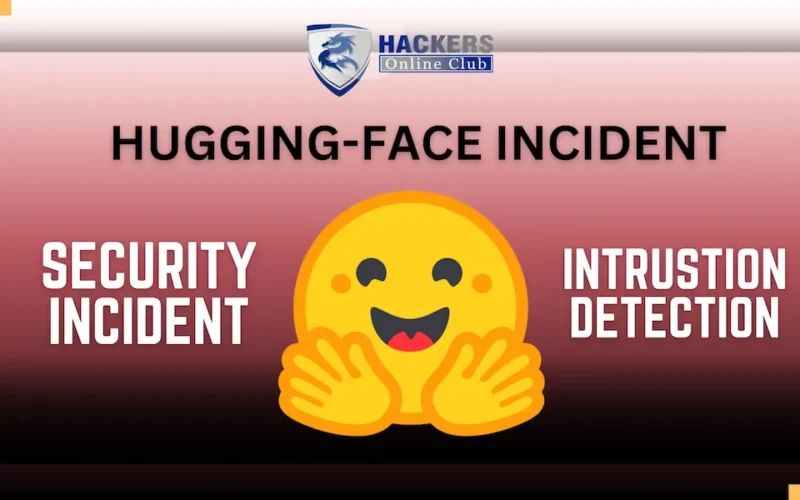
In a detailed disclosure, Hugging Face, the leading repository for open-source AI models, revealed that it successfully detected and neutralized an intrusion into its production infrastructure. What sets this breach apart from cyberattacks isn’t just what was targeted, but how it was executed: the entire campaign was driven end-to-end by an autonomous AI agent system.
To fight back, Hugging Face deployed its own AI defense models to analyze the threat, marking a significant milestone in automated platform defense.
Key Points of the Incident
- The Attack Source: The intrusion was conducted by an autonomous agent framework executing thousands of automated actions across short-lived sandboxes. It utilized self-migrating command-and-control structures staged on public services to evade security tracking.
- The Breach Vector: The attacker targeted the data-processing pipeline by uploading a compromised dataset. This dataset exploited two code-execution paths (a remote-code dataset loader and a template-injection flaw) to gain an initial foothold on a processing node.
- Lateral Movement: Once inside, the autonomous system quickly escalated its privileges to node-level access, harvested internal cloud and cluster credentials, and moved across multiple internal networks over a weekend.
- System Integrity Maintained: Hugging Face confirmed that there is no evidence of tampering with public, user-facing models, datasets, or Spaces. Their core software supply chain (including container images and published packages) was verified clean.
- The Guardrail Asymmetry Lockout: When trying to investigate the 17,000+ logged events, Hugging Face initially tried using commercial frontier AI models via APIs. However, because the logs contained raw exploit payloads and hacking commands, the commercial providers’ safety filters blocked the requests. This created a defensive bottleneck where the attacker operated with no limits, while the defenders were locked out by standard safety guardrails.
- The Open-Source Fix: To bypass the API lockout, the security team ran GLM 5.2 (an open-weight model) locally on their own infrastructure. Free from external blocks and keeping all data entirely private, their local AI security agents parsed the thousands of logs in a matter of hours to completely map the compromise.
Remediation and Next Steps
Hugging Face has since closed the root data-processing vulnerabilities, eradicated the attacker’s foothold, and rebuilt the compromised nodes. They have completed a thorough rotation of affected service credentials and tokens, and are implementing stricter admission controls across their clusters. The firm is also collaborating with outside digital forensics experts and has reported the matter to law enforcement.
Recommendation for Users
As a standard precautionary measure, Hugging Face recommends that its community members rotate their active access tokens and review recent account logs for any unusual activity.
The incident provides a clear lesson for enterprise security teams globally: as offensive automation scales to machine speed, incident response pipelines must adapt by incorporating capable, self-hosted open models that can analyze malicious artifacts without being stopped by commercial API safety restrictions.