



Google quickly calmed widespread fears of a massive security breach, and denying claims that a new attack had compromised millions of Gmail user passwords.
Here are the key points:
- Google acted fast: They immediately addressed the security rumors.
- No New Attack: Google denies that its systems were recently hacked or breached.
- The claims are false: Reports about millions of Gmail passwords being compromised by a new attack are not true.
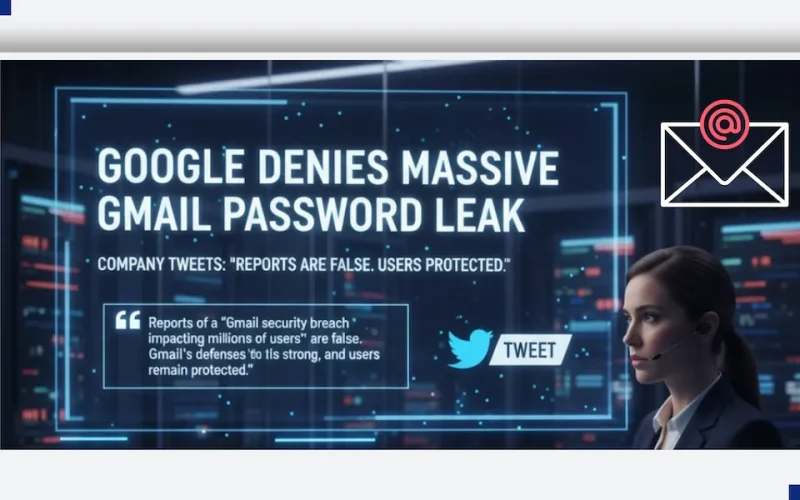
The tech giant released a direct statement via their official “News from Google” social media account, addressing the rumors head-on:
Reports of a “Gmail security breach impacting millions of users” are false. Gmail’s defenses are strong, and users remain protected.
— News from Google (@NewsFromGoogle) October 27, 2025
Understanding the Controversy
The security panic began after reports highlighted the circulation of a massive dataset, allegedly containing over 183 million email credentials—including many linked to Gmail addresses—that surfaced online.
Cybersecurity experts, including Troy Hunt of the breach notification platform Have I Been Pwned, confirmed the collection contains login data. However, Google clarified that the exposed credentials did not result from a new breach of Gmail’s systems.
The company explained that the confusion stems from a misunderstanding of “infostealer databases.” These are large compilations of login information stolen over time from individual, malware-infected devices or through past breaches of other, non-Google services, then aggregated and shared by cybercriminals.
In essence, the data is believed to be old, stolen credentials circulating on the dark web, not a new successful attack on Google’s infrastructure.
Google’s Security Advice for Users
While Google assures users that Gmail itself remains secure, the incident serves as a crucial reminder for individuals to strengthen their personal account security.
Google and other experts strongly recommend the following steps:
- Check Your Exposure: Users concerned about their credentials can check if their email address is included in known leaks on sites like Have I Been Pwned.
- Enable 2-Step Verification (2SV): This adds a critical layer of defense, making it nearly impossible for attackers to access your account even if they have your password.
- Adopt Passkeys: Google encourages users to switch to passkeys, which are a safer, passwordless alternative that uses biometrics or device locks.
- Change Passwords: Immediately reset your password if you discover it has been compromised or if you are reusing it across multiple sites.
Google stated that its systems actively monitor for large dumps of exposed credentials and take action, including forcing password resets for affected accounts, to keep users safe.