

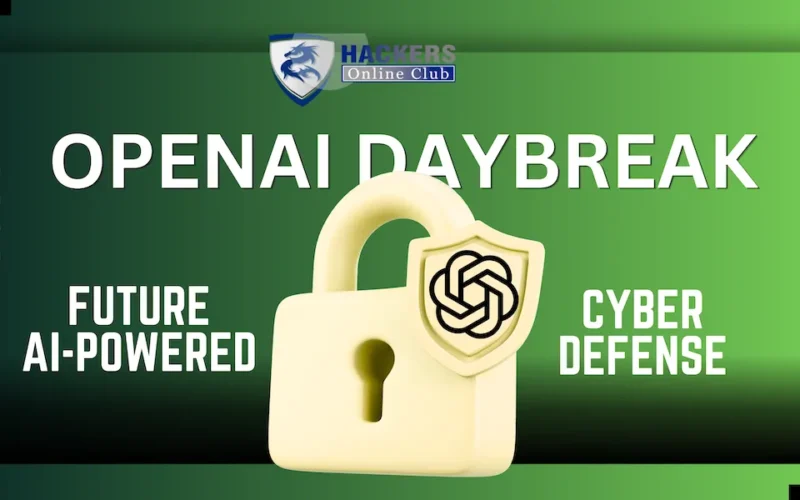
OpenAI just announced a major cybersecurity initiative that could improve how organizations protect their systems and information.
Here’s everything you need to know about Daybreak—OpenAI’s bold move to secure every organization on Earth using cutting-edge AI.
What’s the Big Deal?
– Mission: Democratize patching vulnerable software at machine speed, moving beyond just finding bugs to actually fixing them automatically.
– Core Philosophy: “Finding vulnerabilities is important, but landing the fix protects the world.
Key Launches & Updates
Codex Security Plugin (Major Update)
– Scanned 30+ million commits across 30,000+ codebases since March preview
– Human reviewers confirmed 70,000+ fixes; auto-validated 500,000+ more
– Now offers out-of-the-box defensive workflows including:
– Deep codebase scanning with severity reports
– Attack path tracing and threat modeling
– Automated patch generation for review
– Integration with existing vulnerability management systems via SARIF files and CodeQL queries
GPT-5.5-Cyber Goes Full Release
– Achieved 85.6% score on CyberGym (beating GPT-5.5’s 81.8%)
– Outperforms on real-world benchmarks:
– ExploitGym: 39.5% vs 25.95% (turning vulns into working exploits)
– SEC-bench Pro: 69.8% vs 63.1% (long-horizon vulnerability discovery)
– Available through limited release to trusted defenders only
– Features stronger verification, monitoring, and scoped controls
Daybreak Cyber Partner Program
– Enables security vendors to integrate GPT-5.5 with Trusted Access for Cyber
– Initial partners include leading security software providers
– Allows customers to benefit from AI-powered defense without direct model access
– Expanding to more organizations in coming months
Patch the Planet Initiative
A groundbreaking collaboration tackling open-source security:
– Founders: Trail of Bits + HackerOne + Calif researchers
– Participants: 30+ major open-source projects committed, including:
– cURL, Go, Python, Sigstore, pyca/cryptography
– Approach: Expert human security researchers equipped with Codex Security work directly with maintainers
– Support Provided: ChatGPT Pro, conditional Codex Security access, API credits
– Early Results: Initial 5-day sprint surfaced hundreds of issues, merged dozens of patches
– Why It Matters: 94% of widely-used open-source projects have fewer than 10 developers maintaining 90%+ of code
Government & Critical Infrastructure Partnerships
OpenAI is going global with trusted access agreements:
– Active partnerships: Australia, Canada, France, Germany, Japan, Republic of Korea, UK, EU institutions (ENISA)
– US Collaboration: Working with CAISI, ONCD, and OSTP on pre-deployment testing and Executive Order implementation
– Focus: Tailored safeguards for critical infrastructure operators and government networks
– Goal: Make advanced AI useful to defenders while blocking malicious actors
Why This Changes Everything
The Cybersecurity Bottleneck Has Shifted:
– Old Problem: Finding vulnerabilities required rare expertise
– New Reality: AI can find vulnerabilities fast—but now patching is the bottleneck
– Daybreak Solution: End-to-end automation from discovery → validation → patching → deployment
Democratization Over Concentration:
– Frontier defensive capabilities shouldn’t be limited to a few elite teams
– Software powers everything from critical infrastructure to everyday apps
– Every defender needs access to these tools before attackers exploit flaws
Safety & Governance
– Humans remain in control of findings investigation and change approval
– Stronger verification, monitoring, and abuse-prevention standards
– Coordinated disclosure processes maintained
– Scope-limited access with enhanced oversight for GPT-5.5-Cyber
What’s Next?
Organizations can now:
– Run Codex Security on their own codebases
– Work with OpenAI Daybreak for vulnerability remediation
– Security partners can strengthen defensive tools with frontier models
– Open-source maintainers can join Patch the Planet for expert support
Bottom Line: OpenAI isn’t just building smarter AI—they’re building a safer internet. Daybreak represents a fundamental shift from reactive vulnerability hunting to proactive, automated cyber resilience at global scale.