
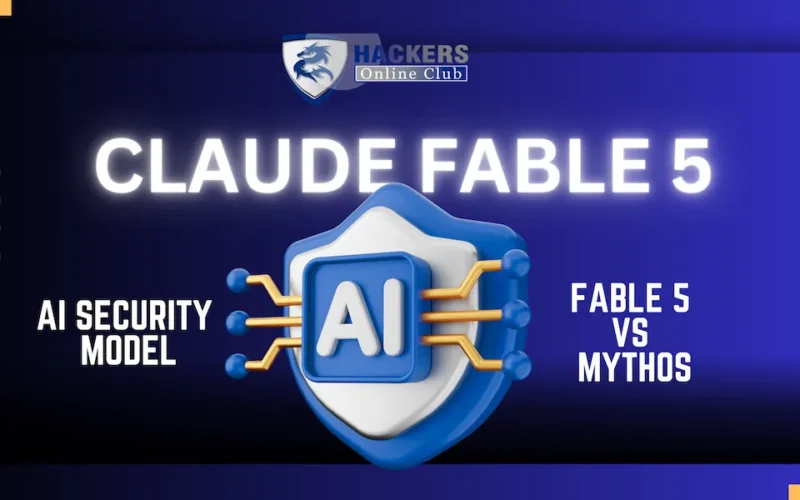
The real question in cybersecurity isn’t “Which AI is smarter?”—it’s “Which AI helps security teams make better decisions?” That’s where Claude Fable 5 and Mythos stand apart. While Fable 5 prioritizes security, reliability, and operational trust, Mythos is designed for deeper reasoning, threat exploration, and advanced cyber research.
While Fable 5 emphasizes reliability, safety guardrails, and enterprise readiness, Mythos appears geared toward deeper analytical reasoning and exploratory threat research.
The result is not a competition with a single winner, but rather two models optimized for different cybersecurity missions.
Claude Fable 5: Built for Security Operations
Security teams require predictable and trustworthy outputs. In high-stakes environments such as Security Operations Centers (SOCs), vulnerability management programs, and compliance workflows, and unsafe recommendations can introduce operational risk.
Fable 5 appears designed with these concerns in mind.
Key Strengths
- Secure code review
- Vulnerability assessment assistance
- Incident response documentation
- Compliance mapping (NIST, ISO 27001, SOC 2)
- Security awareness content generation
- Threat intelligence summarization
For CISOs and enterprise security leaders, consistency often outweighs creativity. In this area, Fable 5’s emphasis on safety and factual grounding makes it a practical operational tool.
Best suited for:
- SOC Analysts
- Security Engineers
- GRC Teams
- Compliance Officers
- Secure Software Development Teams
Anthroic noted,
“Fable 5 comes with a new set of classifiers: separate AI systems that detect potential misuse, including jailbreak attempts, and prevent the main model (in this case Fable 5) from responding.”
“Fable 5 complied with zero harmful single-turn requests relating to planning a cyberattack, exploit development, or defense evasion. This held whether or not one of the requests used any of 30 different public jailbreak techniques.”
Mythos: The Researcher’s AI
Where Fable 5 prioritizes operational reliability, Mythos appears focused on exploration and deep analytical reasoning.
For cybersecurity researchers, red teamers, and threat hunters, understanding attacker behavior often requires moving beyond known patterns and examining novel attack paths.
Key Strengths
- Advanced threat modeling
- Adversary simulation
- Emerging attack trend analysis
- Complex attack-chain reasoning
- Strategic cyber risk discussions
- Research and hypothesis generation
This makes Mythos particularly attractive for teams investigating sophisticated threats, advanced persistent threats (APTs), and future attack scenarios.
Best suited for:
- Threat Researchers
- Threat Intelligence Analysts
- Red Teams
- Security Strategists
- Cybersecurity Academics
Cybersecurity Verdict
If your goal is Defending Infrastructure
Choose Claude Fable 5
Because security operations require:
- Consistent outputs
- Strong safety controls
- Reliable code analysis
- Compliance alignment
- Lower risk of unsafe recommendations
Exploring Emerging Threats
Choose Mythos
Because research requires:
- Deep reasoning
- Hypothesis generation
- Attack-chain exploration
- Strategic thinking
- Open-ended analysis
The cybersecurity industry is moving toward a future where multiple AI systems collaborate.
A realistic enterprise workflow may look like this:
Fable 5 – Operations & Defense
- Secure coding
- Vulnerability triage
- SOC workflows
- Compliance
Mythos – Research & Strategy
- Threat hunting
- Adversary simulation
- Attack-path discovery
- Security forecasting
The most mature security organizations may eventually use both: one AI to help defend today’s infrastructure, and another to help anticipate tomorrow’s threats.