



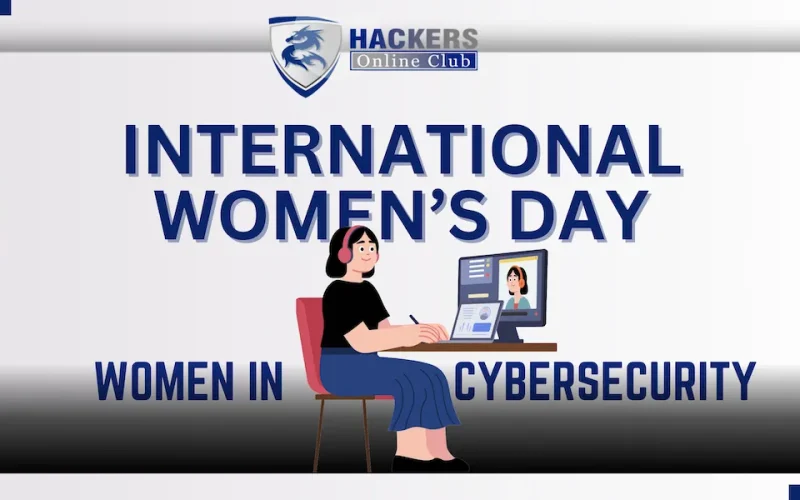
It is International Women’s Day 2026, and the narrative has shifted. We aren’t just talking about “getting more women into tech”—we are talking about how women are currently the primary architects of Digital Trust.
As AI becomes the backbone of our economy, the need for diverse perspectives has moved from a “diversity goal” to a “security requirement.”
The 2026 Landscape: Key Trends
The integration of AI into cybersecurity has created new roles where women are uniquely positioned to lead.
- The Rise of AI Ethics & Safety: AI models are only as good as their training. Women are leading the charge in “Red Teaming” (stress-testing) AI to prevent gender bias and discriminatory outputs.
- Closing the Talent Gap: With a global shortage of cybersecurity professionals, companies are aggressively recruiting women from non-traditional backgrounds (law, psychology, and ethics) to fill AI-driven security roles.
- Human-Centric Defense: As hackers use “Deepfakes” and social engineering, the defense is shifting toward Cyber-Psychology—a field dominated by female researchers focusing on how humans interact with malicious AI.
We asked a common question to women entrepreneurs, and they replied as follows.
Que: “As women entrepreneur working in AI and cybersecurity, what key innovations or solutions do you believe are most needed today to create a safer and more inclusive digital space for women?”
Ashwini Siddhi | Co-Founder & CEO , Securacy.AI

Most user safety and security today is still reactive. What we need is security and privacy designed into systems and platforms from the beginning.
As AI becomes more embedded in our lives, platforms must proactively address risks like harassment, deepfakes, identity misuse, and privacy violations that disproportionately impact women. The real innovation is making safety, privacy and security built-in and accessible—not something users have to fight for after harm happens.
Julia Karpuk | Product Manager, Riskora.io partner

As a woman entrepreneur building AI products for fashion tech and partnering with cybersecurity company Riskora.io, I observe a critical gap: bias-free AI risk assessments for women-led SMBs in fintech/crypto/ and product businesses.
Working with founders/CTOs, we see the same pain point – discriminatory algorithms in hiring/credit scoring. Our compliance solutions help detect and mitigate these biases, creating safer, inclusive digital spaces where women thrive without opaque AI penalties.
Gry Evita Sivertsen | Founder Gritera Stavanger & COO @ Gritera Security

More female role models in leading positions! Just having more women will not create the same affect as having more women in positions that can generate real effect.
Having more women will also attract more women, seeing someone you can relate to make it happen, makes it more believable for others that it is also possible for them.
Vanessa Kindzhakova | Company Director | Octo Security Group (OSG)

As a woman entrepreneur working in AI and cybersecurity, I believe the most critical innovations needed today focus on trust, resilience, and access in the digital ecosystem.
First, we must strengthen digital identity and personal data protection. As technologies like generative AI evolve, the risk of impersonation, deepfakes, and identity based attacks grows significantly. Advancing identity verification frameworks, privacy preserving technologies, and AI driven threat detection will be essential to protecting individuals, particularly women who are disproportionately targeted by online harassment and impersonation.
Second, the development of responsible and auditable AI systems is crucial. AI models must be built with transparency, bias evaluation, and accountability mechanisms embedded into their design. In cybersecurity, this means deploying AI not only to detect threats but also to ensure automated systems do not unintentionally reinforce existing inequalities or vulnerabilities.
Finally, innovation must extend beyond technology itself to education and professional access. Accessible cybersecurity education, mentorship, and strong professional support networks for women can significantly increase both digital safety and representation in technical leadership. When women have the knowledge, tools, and communities to navigate digital risk, they become stronger participants in shaping the future of technology.
Creating a safer and more inclusive digital environment will require collaboration between technologists, industry leaders, and policymakers. By combining responsible AI development with stronger cybersecurity frameworks and meaningful support for women entering the field, we can build a digital landscape that is not only more secure, but also more equitable and resilient.
Maria Estepa | Head of Business Development at Confide & Co-founder at Shield

As an entrepreneur working in AI and cybersecurity, I’m less interested in the hype and more focused on Digital Sovereignty.
We spend a lot of time building security tools for corporations, but we often overlook the individual. To create a truly safe space for women, we need AI-driven solutions that give us granular, intuitive control over our own data and digital likeness. This is how we proactively stop threats like deepfakes and AI-driven harassment before they can do damage.
But the tech is only half the battle. We need to shift the Inclusion of Intent. We need more women in the rooms where AI risk is actually defined—embedding bias detection into the code from day one, not as an afterthought.
In my 16 years in this industry, I’ve learned we don’t just need a seat at the table; we need to be the ones designing the room. A safer digital space happens when we stop asking women to ‘protect themselves’ and start building systems that simply refuse to tolerate harm.
Melissa Weston | CMO, Cyberr®

One of the biggest ways to make the digital world safer for women is simply having more women building it. AI and cybersecurity are shaping the infrastructure of modern society, but women remain significantly underrepresented in the teams designing these systems.
The innovation we need isn’t just better security tools. It’s better pathways into the industry, better visibility of talent, and platforms that make expertise easier to recognise regardless of background. When the people building digital systems reflect the diversity of the people using them, the internet becomes safer for everyone.