



HOC Shorts | BREAKING!
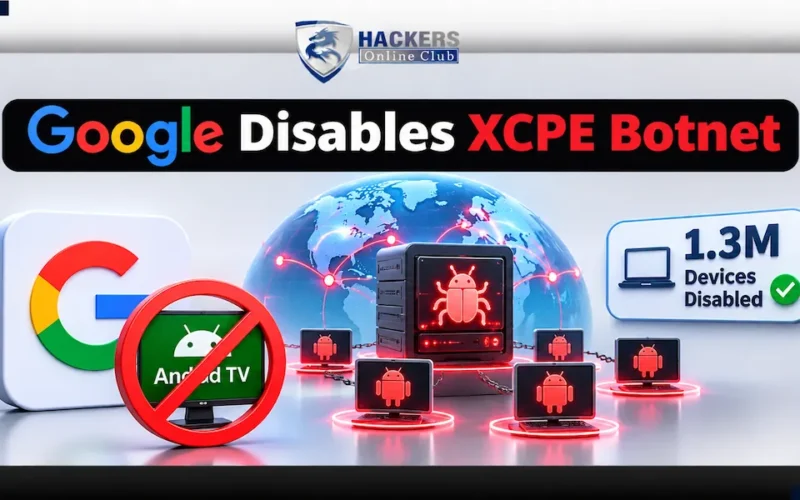
Google, alongside industry security partners and law enforcement, successfully dismantled the XCPE botnet, cutting off command-and-control infrastructure controlling over 1.3 million infected devices.
- The Culprit: Google’s Threat Intelligence Group (GTIG) linked the campaign with high confidence to Videostrong Technology, a Shenzhen-based OEM/ODM that manufactured Android-powered TV set-top boxes, digital signage, and karaoke hardware.
- The Malware Mechanism: Videostrong intentionally preinstalled stealthy backdoors into certified device firmware to turn consumer hardware into residential proxy nodes, ad-fraud engines, and criminal entry points.
- The Penalties: Google completely terminated its partnership, revoking Videostrong’s license and banning the company—along with any future subsidiaries—from building or supplying software for certified Android devices.
Google Pulls the Plug: Disassembles 1.3-Million-Device Android Botnet and Cut ties with Hardware company
In a rare and aggressive supply-chain crackdown, Google announced the successful disruption of the XCPE botnet—a massive, malicious network that quietly hijacked more than 1.3 million consumer Android devices right out of the box.
Unlike typical malware campaigns that infect devices via phishing links or malicious app downloads, this operation came straight from the assembly line. Google’s Threat Intelligence Group (GTIG) revealed that a certified hardware manufacturer intentionally preinstalled the backdoor into factory firmware for profit.
How the XCPE Supply-Chain Backdoor Worked
The operation bypassed standard security checks by embedding malicious services deep within the operating system of Android-based TV set-top boxes and IoT hardware (such as karaoke machines and telehealth terminals).
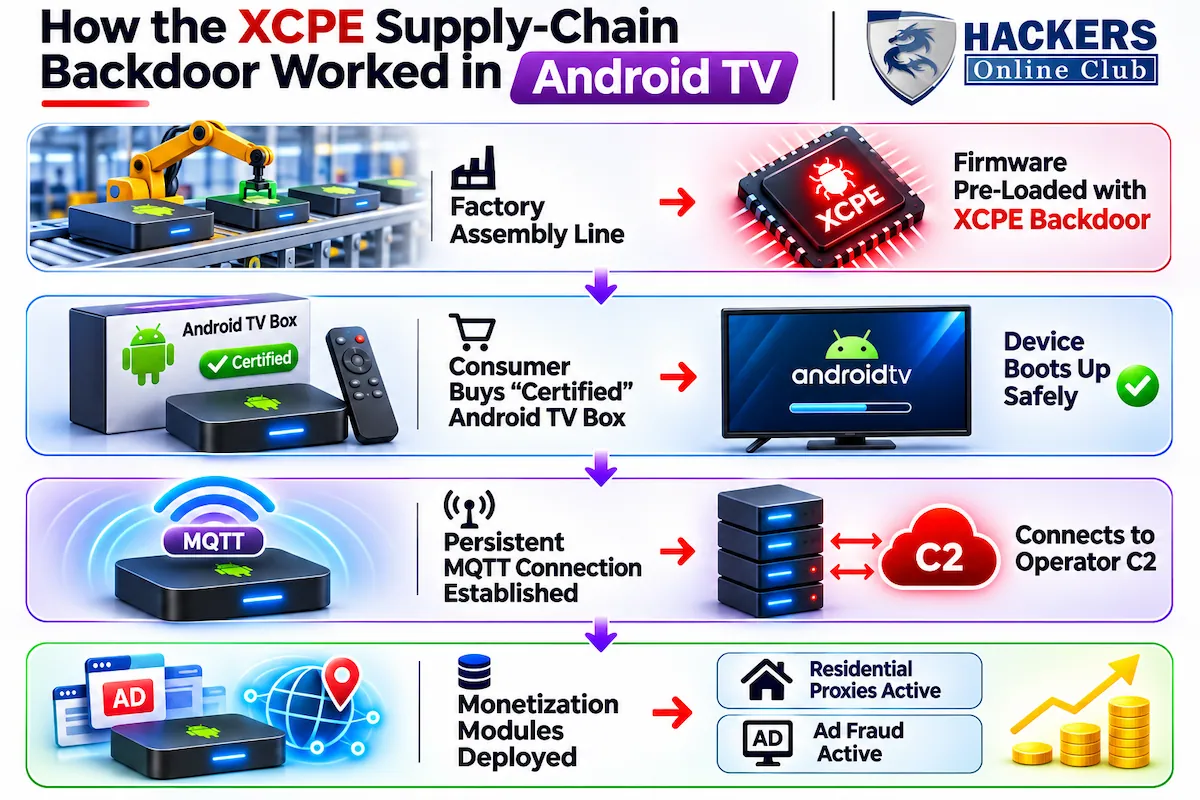
1. The Manufacturer: Shenzhen-based Original Equipment Manufacturer (OEM) Videostrong Technology built the backdoor directly into the firmware of devices sold globally under brands like MECOOL and white-labeled alternatives.
2. The Connection Loop: Once plugged in by an unsuspecting user, the device established a persistent, real-time Message Queuing Telemetry Transport (MQTT) connection to remote command-and-control (C2) servers.
3. Criminal Monetization: Videostrong rented out backdoor access to criminal affiliates. These threat actors pushed automated background modules that transformed user home networks into residential proxy exit nodes (e.g., Linkfog, AppSalt) or executed background ad-fraud operations using hidden web overlays and simulated keystrokes.
—
Global Scope & Industry Intervention
Telemetry shared by security partners (including Lumen, HUMAN Security, Plume, Synthient, and TrendAI) showed infected boxes scattered across more than 200 models worldwide, with heavy concentrations in Malaysia, Brazil, Iraq, Mexico, Taiwan, and thousands of units across Western markets like the U.S. and Europe.
Infrastructure Takedown: Google neutralized the XCPE C2 infrastructure, severing communication channels for millions of total endpoints that had downloaded secondary monetization payloads.
The Hardware Ban: Google took the definitive step of revoking Videostrong’s manufacturing license, completely banning the company and all future subsidiaries from building certified Android hardware or supplying software to certified vendors.
—
What Consumers and Organizations Should Do
Because the malware is burned directly into the device firmware, traditional antivirus apps cannot easily remove it. Security analysts recommend aggressive defensive measures:
Hardware Replacement: Security research firm Synthient recommends that consumers using unverified streaming boxes or suspected Videostrong/MECOOL hardware disconnect and discard the units.
Network Segregation: Enterprises must treat unmanaged consumer IoT devices on remote employee home networks as untrusted, isolating corporate access behind secure, managed endpoints.