


For most CISOs and risk management teams, the concept of exposure management conjures up images of a dashboard filled with CVEs, patch states, and vulnerability scan results across the entire network. The discipline has come a long way since Tenable first introduced the cyber exposure category in 2017 and Gartner formalized continuous threat exposure management (CTEM) in 2022 — but here’s the reality that is too often ignored: if you only focus on what’s immediately visible in your exposure strategy, you’re giving yourself an artificially low risk score.
The world of operational technology (OT) environments, from industrial control systems (ICS) to building management interfaces, is the dark matter of the enterprise. It is ubiquitous, unseen, and critical to operation and safety. Yet too many exposure assessment and management methodologies still view OT as a different domain, giving you a false sense of security.
This article will look at why operational technology security matters for enterprise exposure management, how ignoring it distorts risk reporting, and what a converged approach looks like for modern businesses.
What is OT and Why Does it Matter?
A number of components are used by operational technology (OT) to monitor and control physical processes in areas like energy, manufacturing, transportation, and utility services. These include Programmable Logic Controllers (PLCs), Supervisory Control And Data Acquisition (SCADA) Systems, Human Machine Interfaces (HMI), and Building Management Systems.
Before digital transformation, operational technologies were never designed to be a part of the internet, and were isolated or “air-gapped” for safety. However, digitization exposed them to increasing cyber risk by connecting them to the internet through remote monitoring and analysis capabilities.
The consequences of a cyberattack in OT are severe, going beyond data loss or damage to reputation. They can cause operational disruptions, physical harm, environmental incidents, regulatory liabilities, and even loss of life. An attack that compromises the HMI or PLC controlling a cooling system is a potential backdoor into the heart of your enterprise risk profile.
Why Does Exposure Assessment Fail Without OT Visibility?
Exposure assessment as a discipline aims to quantify an organization’s attack surface and prioritize what to fix. However, if your assessment stops at traditional IT systems (servers, endpoints, cloud workloads), it misses an entire world of risk.
Here’s why OT environments evade conventional exposure models:
- Legacy systems without modern security controls: Many OT devices were developed before cybersecurity was a thing. They may not have encryption, authentication, or patching mechanisms available.
- Interconnected networks increase attack surfaces: Digital transformation initiatives have integrated many previously isolated OT systems into corporate networks and the internet, increasing the likelihood of malware, ransomware, and lateral movement from IT networks.
- Limited visibility and monitoring: OT environments rarely have consistent asset inventories or monitoring, making it difficult to detect anomalous activity or surface risk to security teams.
An exposure assessment that ignores these realities produces risk scores that look great on paper, but haven’t accounted for exposures that adversaries will target first.
The Convergence of IT, OT, Cloud, and Identity Risk
Bad actors don’t respect the artificial boundaries that the organizational structure provides. A spear-phishing campaign in the IT environment could be the initial domino that sets off a chain reaction, leading to the shutdown of the entire plant.
Today, attackers are pivoting from the IT environment to the OT environment, and common entry points and poor segmentation are helping them transcend domain boundaries.
This convergence requires a unified approach to exposure management that spans:
- Enterprise IT systems
- Cloud workloads and identities
- Network-connected OT systems
- Third-party and vendor access paths
Not connecting these domains is much like reading an incomplete map and making critical business decisions based on it.
From Vulnerability Counts to True Cyber Exposure
Traditional vulnerability management prioritizes vulnerabilities based on static scores like CVSS, which often generates endless backlogs of patching that need to be done. However, OT environments, this approach fails miserably for several reasons:
- Patch windows are operationally constrained: Industrial systems often cannot be taken offline without disrupting production or safety processes, so patching becomes more complex than in IT.
- Context matters more than counts: An unpatched vulnerability on an HMI controlling a critical process is far more impactful than dozens of non-critical IT vulnerabilities that cannot be exploited in practice.
True exposure management accounts for where a vulnerability sits in the attack path, its business impact, accessibility, and the actual threat likelihood. It’s risk-based rather than tick-box driven.
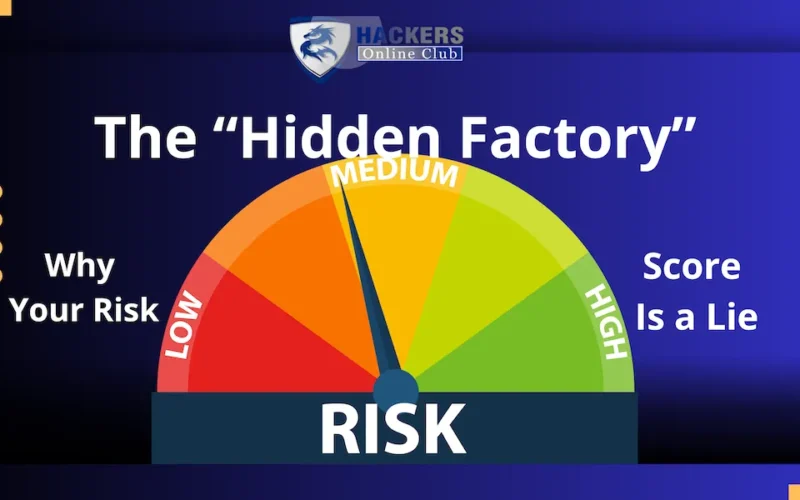
What’s the “Hidden Factory” Problem?
Imagine you’re evaluating risk for a manufacturing company. The CEO gets accustomed to quarterly risk scorecards showing declining vulnerability counts and improving trends. But beneath the figures, dozens of legacy OT devices (unscanned and unmanaged) are quietly connected to corporate networks or exposed through remote maintenance channels.
This “hidden factory” problem is real:
- Independent OT assets like PLCs, HVAC systems, and SCADA interfaces may not be included in security monitoring.
- Asset inventories may not include records of these systems, leaving them unaccounted for.
- Remote vendor access routes, which enter very sensitive areas, may not be monitored.
The result is board-level reporting and risk scores that don’t reflect true business exposure.
Rethinking Risk Scores for Board-level Decision Making
Boards and executive leadership are not interested in patch counts, they want assurance that critical operations are resilient, secure, and aligned with business continuity goals. When OT exposures aren’t reflected in risk metrics, decision makers lack the full picture needed for strategic investment and risk prioritization. Reflected in risk metrics, decision makers lack the full picture needed for strategic investment and risk prioritization.
A better risk model should:
- Integrate OT visibility into the business’s risk assessments.
- Express technical risk in business terms, particularly in terms of operational disruption, risk of harm, and regulatory risk.
- Facilitate risk tolerance conversations using measurable risk data, not just vulnerability numbers.
This allows for better communication with boards and risk committees, converting visibility gaps into decision levers.
What’s the Difference Between Exposure Management and Exposure Assessment?
While exposure assessment is a valuable starting point (quantifying what exists and indicating where issues may lie), it is not enough on its own.
The real value lies in exposure management: a continuous, context-rich practice that integrates disparate data, prioritizes action based on risk to the business, and stays aligned with evolving threats and operations.
An exposure management practice that includes OT:
- Delivers continuous visibility, not just point-in-time scans.
- Unifies IT and OT domains to provide true cyber exposure.
- Enables prioritization that is informed by real-world threat scenarios.
- Helps deliver board-ready reporting that links cyber risk to business outcomes.
Stop Treating OT as “Other”
OT security is no longer a nice-to-have, nor a siloed responsibility within engineering teams. It’s a critical component of overall enterprise exposure management and a vital part of overall risk visibility in 2026 and beyond.
The lack of focus on OT exposures is a critical blind spot in any security strategy, affecting overall risk scores, the ability to defend against attackers, and operational and safety risks, which no board member wants to have to explain.
To manage OT exposure, you must break down silos, merge IT and OT security practices, and shift from static vulnerability management to dynamic risk-informed exposure management. The hidden factory is waiting to be seen, measured, and secured.
About the author:
Kirsten Doyle has been in the technology journalism and editing space for nearly 24 years, during which time she has developed a great love for all aspects of technology, as well as words themselves. Her experience spans B2B tech, with a lot of focus on cybersecurity, cloud, enterprise, digital transformation, and data centre. Her specialties are in news, thought leadership, features, white papers, and PR writing, and she is an experienced editor for both print and online publications. She is also a regular writer at Bora.