



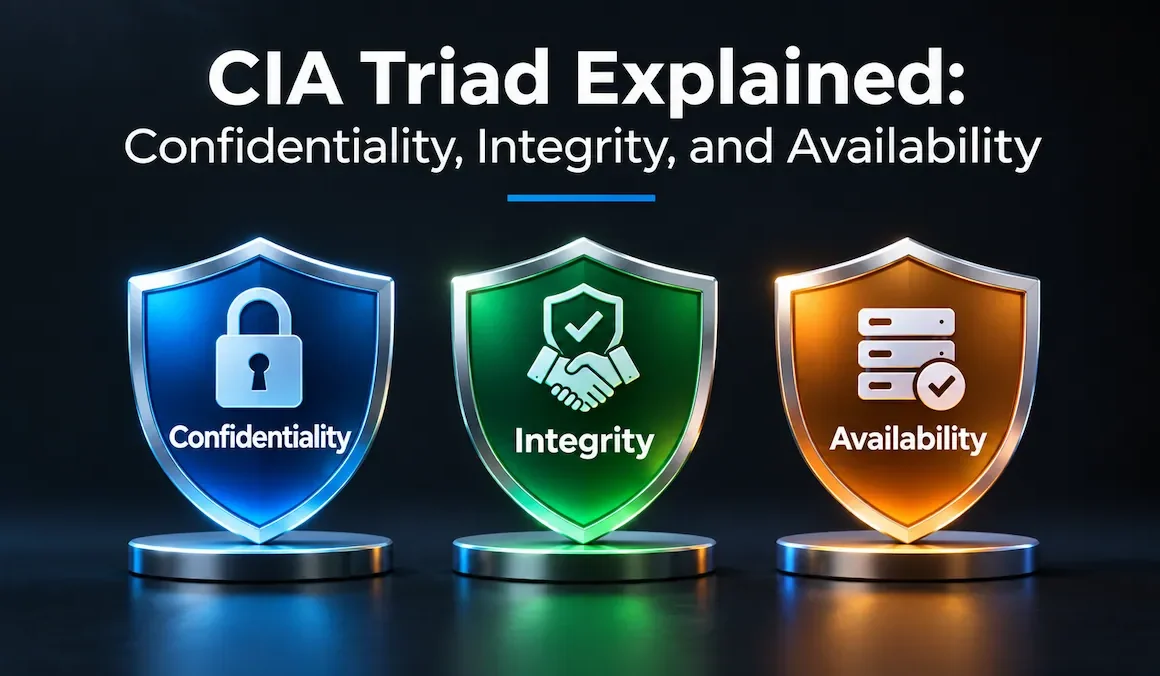
In the complex world of cybersecurity, every policy, tool, and framework ultimately traces back to a single, foundational concept: the CIA triad. Whether you are securing a multinational cloud infrastructure or protecting a small business network, understanding the CIA triad explained simply and effectively is the first step toward building a resilient security posture.
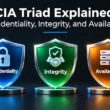
The CIA triad stands for Confidentiality, Integrity, and Availability. These three pillars form the cornerstone of information security, guiding organizations in identifying vulnerabilities, establishing policies, and implementing technical controls. This comprehensive guide breaks down each component, provides real-world examples, and offers actionable steps to implement the CIA triad in your organization.
The CIA triad is a conceptual model that defines the three primary objectives of information security. It is not a specific technology or software, but rather a guiding framework used to evaluate risks and design security controls.
- Confidentiality: Ensuring that sensitive information is accessed only by authorized individuals, systems, or processes.
- Integrity: Ensuring that data remains accurate, complete, and unaltered by unauthorized parties (or accidental corruption) throughout its lifecycle.
- Availability: Ensuring that information and resources are reliably accessible to authorized users whenever they are needed.
Also read: What is EDR (Endpoint Detection and Response)? How it Works
Confidentiality is often the first pillar that comes to mind when people think of cybersecurity. It is all about preventing unauthorized access to sensitive data, such as personal identifiable information (PII), financial records, intellectual property, and healthcare data.
- Data Breaches: Hackers exploiting vulnerabilities to exfiltrate databases.
- Insider Threats: Malicious or negligent employees accessing data they shouldn't.
- Eavesdropping: Intercepting unencrypted network traffic (Man-in-the-Middle attacks).
| Control Type | Examples |
|---|---|
| Encryption | AES-256 for data at rest; TLS 1.3 for data in transit. |
| Access Control | Role-Based Access Control (RBAC), Principle of Least Privilege (PoLP). |
| Authentication | Multi-Factor Authentication (MFA), biometric verification, strong password policies. |
| Physical Security | Biometric locks on server rooms, secure document shredding. |
Integrity ensures that data is trustworthy. It guarantees that information has not been tampered with, altered, or destroyed by unauthorized entities, and that it remains consistent and accurate over its entire lifecycle.
- Malware/Ransomware: Malicious software that encrypts or modifies files.
- Man-in-the-Middle (MitM) Attacks: Altering data packets as they travel across a network.
- Human Error: Accidental deletion or modification of critical database records.
| Control Type | Examples |
|---|---|
| Hashing | Using SHA-256 or SHA-3 to generate unique fingerprints for files to detect tampering. |
| Digital Signatures | Cryptographic proof of the origin and integrity of a message or document. |
| Version Control | Git or database transaction logs to track and revert unauthorized changes. |
| Access Controls | Strict write permissions to prevent unauthorized modifications. |
Availability ensures that systems, applications, and data are up and running when authorized users need them. A system can be perfectly confidential and maintain perfect integrity, but if it is offline during a critical business operation, it is a security failure.
- Distributed Denial of Service (DDoS): Overwhelming a system with traffic to make it unreachable.
- Hardware Failures: Server crashes, disk failures, or network outages.
- Ransomware: Locking access to critical data until a ransom is paid.
- Natural Disasters: Floods, fires, or power outages affecting data centers.
| Control Type | Examples |
|---|---|
| Redundancy | RAID arrays, failover servers, and multi-region cloud deployments. |
| Backups | Regular, automated, and tested backups following the 3-2-1 rule. |
| DDoS Protection | Content Delivery Networks (CDNs) like Cloudflare, and traffic scrubbing services. |
| Disaster Recovery | Documented and regularly tested Incident Response (IR) and Business Continuity Plans (BCP). |
To understand how the CIA triad explained works in practice, let’s look at a modern e-commerce platform processing a customer's credit card transaction.
- Confidentiality: The customer's credit card number is encrypted using TLS 1.3 while traveling from their browser to the server, and stored using AES-256 encryption in the database. Only the payment processing service has the decryption key.
- Integrity: When the order is submitted, a cryptographic hash ensures that the order total (e.g., $50.00) cannot be altered to $5.00 by a hacker intercepting the request. Digital signatures verify the payment gateway's response.
- Availability: The website is hosted behind a load balancer with auto-scaling capabilities and a CDN to absorb Black Friday traffic spikes and mitigate DDoS attacks, ensuring customers can always complete their purchases.
In the real world, perfect security is a myth. Implementing extreme controls for one pillar of the CIA triad often negatively impacts another. Security is about finding the right balance based on the organization's risk appetite.
- Confidentiality vs. Availability: Requiring 5-factor authentication and IP whitelisting makes data highly confidential, but it severely degrades availability and user experience, frustrating legitimate employees.
- Integrity vs. Availability: Implementing strict, multi-layered approval workflows for every database change ensures high integrity, but it slows down system updates and reduces operational availability.
- ✓Data Classification: Have you categorized data (Public, Internal, Confidential, Restricted)?
- ✓Encryption: Is sensitive data encrypted both at rest and in transit?
- ✓Access Control: Is Multi-Factor Authentication (MFA) enforced for all privileged accounts?
- ✓Change Management: Are all system and code changes tracked, reviewed, and approved?
- ✓File Integrity Monitoring (FIM): Are critical system files monitored for unauthorized alterations?
- ✓Backups: Are backups regularly tested for successful restoration and data accuracy?
- ✓Redundancy: Are there failover systems in place for critical servers and network paths?
- ✓DDoS Mitigation: Is there a plan or service in place to handle traffic volumetric attacks?
- ✓Disaster Recovery: Has the Business Continuity Plan (BCP) been tested in the last 12 months?
The CIA triad is the foundational model of information security. It stands for Confidentiality (keeping data secret from unauthorized people), Integrity (ensuring data is accurate and hasn't been tampered with), and Availability (making sure data and systems are accessible when needed). It acts as a checklist for securing any IT system.
A failure in any pillar constitutes a security incident. If confidentiality fails, data is leaked. If integrity fails, data is corrupted or falsified, leading to bad decisions or fraud. If availability fails, business operations halt, leading to financial loss and reputational damage. Often, a breach in one pillar leads to a breach in another (e.g., ransomware destroys both integrity and availability).
No, the CIA triad is not outdated; it is timeless. While the methods of attack and defense have evolved (e.g., AI-driven phishing, cloud misconfigurations), the fundamental goals of security remain exactly the same. Modern frameworks like Zero Trust and NIST CSF are simply advanced methodologies designed to better achieve the goals of the CIA triad.
The CIA triad has three pillars. The Parkerian Hexad, proposed by Donn Parker, expands this model to six attributes by adding Possession/Control, Authenticity, and Utility. While the Hexad is more granular and useful for specific data governance scenarios, the CIA triad remains the most widely adopted and universally understood foundational model in cybersecurity.