




HOC Shorts |
U.S. Air Force cloud one breached – the U.S. Air Force’s flagship cloud computing hub, with the intrusion uncovered over the past several weeks during a system upgrade.
- What Was Reached: Sources say attackers exploited a software flaw to reach the platform’s control plane—the central management layer—potentially putting sensitive tactical, personnel, and logistics workloads at risk, though data theft and attacker identity remain unconfirmed.
- Operational Fallout: Application migrations to Cloud One were paused, updates to running apps were blocked right as new software bugs hit the industry, and administrator privileges were revoked for some users.
- Pro Tip: When central cloud management layers get locked down during an incident, teams cannot push normal patches—so enforce strict least-privilege access, isolate affected workloads, and track every unpatched app until normal update pipelines reopen.
U.S. Air Force “Cloud One” Flagship Platform Reportedly Hacked
Cyber defenders are monitoring another major cloud security incident following reports on November 27, 2026, that hackers had breached Cloud One, the U.S. Air Force’s flagship cloud computing environment.
Discovered within the past several weeks during system upgrade work, the intrusion adds to a string of reported cyber incidents across U.S. federal and defense agencies—and underscores how dangerous it is when attackers reach central cloud management layers. The Air Force has declined to comment on specific network security or operational details, while investigators work to determine who was behind the intrusion and whether any data was taken.
In a statement to Reuters,
the Air Force said it “does not comment on the security posture, vulnerabilities or operational status of specific networks and systems. We continuously take prudent measures to protect Department (of the Air Force) information, systems and mission capabilities.”
Why Cloud One Matters (And What a “Control Plane” Does)
If you are not deep in cloud architecture, Cloud One is not just a single website—it is a core military computing hub built across major cloud providers (including Microsoft, Amazon, Oracle, and Alphabet) that supports applications tied to personnel, logistics, maintenance, radar, and munitions tracking.
Sources indicate the intruders exploited a software vulnerability to reach Cloud One’s control plane. Think of the control plane as the master switchboard or “universal remote” that coordinates and manages cloud workloads:
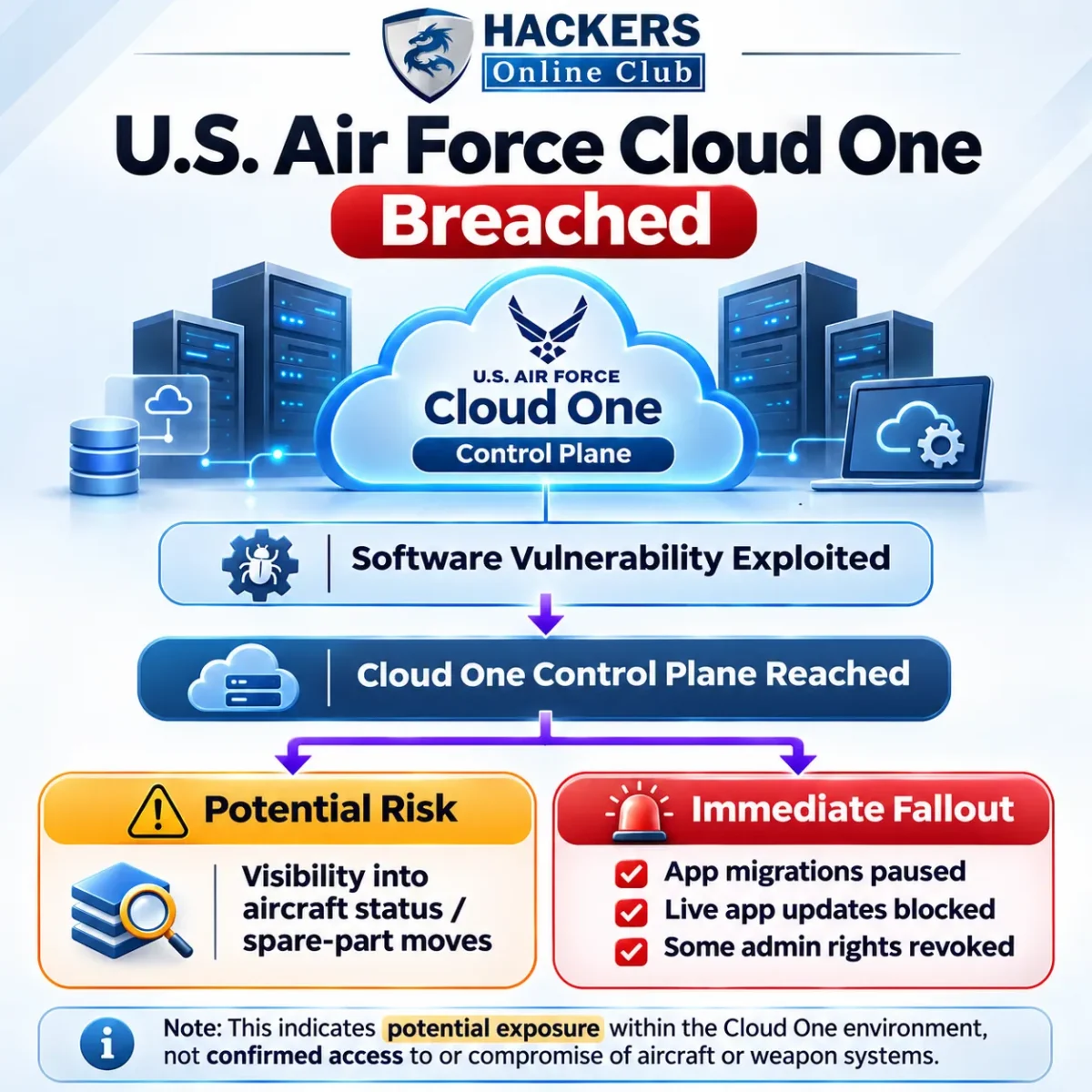
- High-Value Visibility Risk: Reaching the control plane could theoretically let intruders inspect operational details such as aircraft readiness or spare-parts logistics—though it has not been confirmed that attackers accessed or exfiltrated such records.
- Frozen Updates & Migrations: Following discovery, teams paused efforts to move back-office apps onto Cloud One, blocked updates to apps already running there, and pulled back administrator privileges for certain accounts.
- Patching Bottleneck: Blocking updates on active applications creates a tricky catch-22 when new vulnerabilities are disclosed across the wider tech sector and defenders cannot apply fixes right away.
Technical Breakdown: How Control-Plane Intrusions Ripple Outward
When an attacker compromises a centralized cloud control plane rather than a single isolated app, the blast radius shifts from one program to the shared management layer:
1. Centralized Leverage: Because control planes coordinate orchestration, routing, or administrative actions across environments, an uncontained foothold there demands immediate lockdown.
2. Defensive Freeze: Revoking admin access and halting changes stops further tampering during an investigation, but it also freezes routine deployment and patching pipelines.
3. Exposure Window: While a change freeze is active, teams must rely on compensating controls—such as network segmentation, monitoring, and strict access checks—until the underlying flaw is closed and normal updates resume.
Pro Tips for IT & Cloud Security Teams
- Pro Tip 1 — Separate Control-Plane Access From Everyday Workloads: Keep administrative and orchestration planes behind strict access controls, hardware-backed authentication, and tight network boundaries so a compromised app or account cannot easily pivot into management layers.
- Pro Tip 2 — Keep an “Update Freeze” Playbook Ready: During a major incident, halting changes makes sense to preserve forensic evidence and stop bad actors—but you also need a way to track which apps could not be patched and apply fixes the moment pipelines reopen.
- Pro Tip 3 — Audit Privileges Immediately After Any Alert: Revoking or rotating elevated privileges is a standard containment move, so teams should verify who still holds admin rights and review recent activity logs for unexpected changes.
- Pro Tip 4 — Don’t Assume Silence Means No Impact: When agencies or vendors decline to share operational details during an active investigation, treat the gap as an opportunity to review your own cloud posture rather than waiting for full public disclosures.